If you live in or near Louisville, Kentucky, there are some great opportunities in March and April to learn more about beekeeping and support an amazing master beekeeper. Mark your calendars!
March 4th: Kentuckiana Beekeepers Association meeting, 7:30 pm at the Bon Air branch of the Louisville Free Public Library. The evening will focus on "natural approaches to beekeeping and using top bar hives." I'll be introducing the biodynamic approach to beekeeping (in 10 minutes or less) and sharing resources with the group. Hopefully, the local top bar hive expert, Sara Fazio, will also be speaking about her experience using top bar hives. Sara is amazing and passionate about honey bees and beekeeping and I look forward to hearing more about her experience.
http://www.kyanabees.com/
March 8th: Louisville's 3rd Pecha Kucha night. It will be at 21c. I'll be presenting on the importance of Louisville's urban beekeepers - and showcasing several of them. The interviewing process was really fun, and I got to visit several urban apiaries! Here's more about the event:
http://www.pecha-kucha.org/night/louisville/3
March 12th: The annual Bluegrass Beekeeping School. It's held on the KY State University campus in Frankfort. Hundreds of people attend - from all walks of life. It's really fun - one of my most favorite days of the year, in fact! There are so many types of classes, you get to meet other great people who love talking about bees, and there are vendors selling lots of great beekeeping related supplies, books, etc. Including one of the Louisville beekeepers, Bekah Lunn, who created really cool honey bee inspired items.
I'm doing a workshop on Urban Beekeeping. Here's the description:
"Small backyard? Living in the city or near other neighbors? Curious about roof top hives? Maintaining hives in populated areas brings special challenges and considerations. Join
Carrie for some tips on how to be a great urban beekeeper as well as creating a community of
great honey bee neighbors. If you're currently an urban beekeeper, please join the conversation to share your experiences."
Here's more about the school:
http://www.kyagr.com/statevet/bees/bee%20schools/KYBeeSchoolFrankfort.htm
March 13th:
Fresh Start Growers is hosting a great workshop where I'll be doing a 45 minute class for new beekeepers "5 key decisions a new beekeeper must make." I'll bring some fun beekeeping supplies with me.
March 13 Workshop: BeeHave!
Get bee savvy, tame your weeds, and get your plant starts going.
- Introduction to urban beekeeping with Carrie Van Winkle of Fleur de Bee.
- Organic plant starts with Kim Jordan of Wilson Nurseries.
- Organic weed management techniques with Steve Paradis of Fresh Start Growers' Supply.
WHERE: Creation Garden Marketplace, 725 East Market St., Louisville, KY 40202
WHEN: 1-5pm, Sunday, March 13
COST: $15 per person
RSVP: (502) 442-7883 with credit card
All proceeds go to The Shelter for Women & Families Raised Bed Garden Project.
Wednesday, March 2, 2011


Tuesday, December 28, 2010
The First Honey Harvest - an event of great joy.
You likely already know my priority with beekeeping - to support a healthy hive of honey bees - while they teach and inspire me.
Honey has never been a driver for me - I think that a beekeeper who is 'hungry' for honey ends up exploiting the bees in her care - leading to unhealthy hives. Many beekeepers have taken off too much honey to either consume or sell, and then feed the bees high fructose corn syrup or sugar water as an unhealthy, inferior substitute.
Ok - stepping down from the soap box - a surplus of honey can be shared with humans - which is wonderful! By July, the bees had stored over 150 pounds of honey in their hive - wow.
My friend Wendy documented the honey harvest and Rich shared his basement 'brewhouse' space to do the work.
I wanted to find out the simplest, lowest cost way to harvest honey - and after some research online found a wonderful video of the 'crush and strain' method done my 'online mentor' Linda. See here for the video: Linda's Bees.
I first used a bee escape from Brushy Mountain Bee Farm to separate the boxes with honey frames (called honey supers) that I was going to harvest from the rest of the hive. The bee escape allows the bees on the honey supers to move down into the rest of the hive, but not get back up into the honey supers. This worked really well with only a few bees left on the honey supers (vs. thousands) after having it on for a few days. I love this option, as it's chemical free. Often, beekeepers use a chemical to make the bees leave the honey frames.
I pulled 22 frames off of the hive and put them into a plastic bin with a lid (to keep bees from flying back onto the honey frames). I took them around to our screened front porch as a 'holding area' to let any hiding bees fly off before taking them into the house. No stray bees were found!
I had set up a little work area in the basement - with the recommended cardboard to minimize honey tracking everywhere!
Here's the set up:

Plastic bins and nice stock pot - donated from Rich's brewing supplies (many of you know that my husband is a top of the line homebrewer); I used a baking pan to cut the comb from the frames; I bought a bottling pail (which you could make yourself and just buy the 'gate') and 3 mesh filters that fit nicely on the rim of the pail. Total bought was about $45 including the shipping. This was a huge difference from the hundreds of dollars to buy a honey extractor and the other supplies that are often 'needed.'
With my little harvest it was perfect. If I have a larger honey harvest with the addition of hives I'm keeping for others, it could require a bit more of a set up.
Key steps:

Above is the honey comb that's been filtered overnight. Underneath the filter is a pail of beautiful honey ready for bottling.

This is a pic that shows one of my critical 'learning moments' (trying to forgive myself for screwing up and affecting the hardworking bees). These are comb cells packed with precious pollen. It's different colors from different sources (thanks neighbors!). You can see how it's packed in layers. I should have left the frames that had much pollen in the hive for them. They need this source of protein and nutrition to have healthy brood -esp. as they are building up their hive population for the winter. Now I know. : p

Honey harvest! The bottling gate really makes the job easier and less messy. Otherwise, you would use a soup ladel to get the honey into jars. I ordered sweet little honey jars - but ended up loving the simple jelly jars for my own personal daily honey use. For the experienced beekeeper, you'll have already noticed that the honey is flowing over top of the honey gate. Hee hee hee - when I screwed the honey gate into the hole in the pail, I had wondered if there was a certain way to position it. Of course there was - and I did it upside down! It wasn't that bad - but Rich was a little horrified by the incorrectness of it all.
I'll leave you with one of Wendy's 'art pics' - beautiful chunks of wonderful honey comb.

It felt sacred and celebratory to harvest some of their surplus honey. I think this is the gift to the hobby beekeeper - relishing each moment.
Honey has never been a driver for me - I think that a beekeeper who is 'hungry' for honey ends up exploiting the bees in her care - leading to unhealthy hives. Many beekeepers have taken off too much honey to either consume or sell, and then feed the bees high fructose corn syrup or sugar water as an unhealthy, inferior substitute.
Ok - stepping down from the soap box - a surplus of honey can be shared with humans - which is wonderful! By July, the bees had stored over 150 pounds of honey in their hive - wow.
My friend Wendy documented the honey harvest and Rich shared his basement 'brewhouse' space to do the work.
I wanted to find out the simplest, lowest cost way to harvest honey - and after some research online found a wonderful video of the 'crush and strain' method done my 'online mentor' Linda. See here for the video: Linda's Bees.
I first used a bee escape from Brushy Mountain Bee Farm to separate the boxes with honey frames (called honey supers) that I was going to harvest from the rest of the hive. The bee escape allows the bees on the honey supers to move down into the rest of the hive, but not get back up into the honey supers. This worked really well with only a few bees left on the honey supers (vs. thousands) after having it on for a few days. I love this option, as it's chemical free. Often, beekeepers use a chemical to make the bees leave the honey frames.
I pulled 22 frames off of the hive and put them into a plastic bin with a lid (to keep bees from flying back onto the honey frames). I took them around to our screened front porch as a 'holding area' to let any hiding bees fly off before taking them into the house. No stray bees were found!
I had set up a little work area in the basement - with the recommended cardboard to minimize honey tracking everywhere!
Here's the set up:

Plastic bins and nice stock pot - donated from Rich's brewing supplies (many of you know that my husband is a top of the line homebrewer); I used a baking pan to cut the comb from the frames; I bought a bottling pail (which you could make yourself and just buy the 'gate') and 3 mesh filters that fit nicely on the rim of the pail. Total bought was about $45 including the shipping. This was a huge difference from the hundreds of dollars to buy a honey extractor and the other supplies that are often 'needed.'
With my little harvest it was perfect. If I have a larger honey harvest with the addition of hives I'm keeping for others, it could require a bit more of a set up.
Key steps:
 |
| The honey comb has thin caps of wax over each honey cell, which indicates it's finished honey (vs. nectar). |

I used a fork to uncap each side of honey on the frame. I just lightly run the fork down the length of the frame and it nicely breaks the caps to open the cells of honey. After uncapping, I took a sharp knife and cut the comb out of the frame - as I'm doing above. Next year, I'll use a bigger roasting pan - this one was a little too small for the job.
 |
| An action shot taken by Wendy Zent of cutting the comb out of the frame. It was really beautiful. |
 |
| I used a potato masher to mash the comb. I then poured the chunked honey and comb into a filter which was resting on the bottling pail. After researching, I decided to just filter once, which leaves the honey pretty raw, but most of the pollen and comb are well filtered out (some people dont' like 'bits' in their honey!  |

This is a pic that shows one of my critical 'learning moments' (trying to forgive myself for screwing up and affecting the hardworking bees). These are comb cells packed with precious pollen. It's different colors from different sources (thanks neighbors!). You can see how it's packed in layers. I should have left the frames that had much pollen in the hive for them. They need this source of protein and nutrition to have healthy brood -esp. as they are building up their hive population for the winter. Now I know. : p

Honey harvest! The bottling gate really makes the job easier and less messy. Otherwise, you would use a soup ladel to get the honey into jars. I ordered sweet little honey jars - but ended up loving the simple jelly jars for my own personal daily honey use. For the experienced beekeeper, you'll have already noticed that the honey is flowing over top of the honey gate. Hee hee hee - when I screwed the honey gate into the hole in the pail, I had wondered if there was a certain way to position it. Of course there was - and I did it upside down! It wasn't that bad - but Rich was a little horrified by the incorrectness of it all.
I'll leave you with one of Wendy's 'art pics' - beautiful chunks of wonderful honey comb.

It felt sacred and celebratory to harvest some of their surplus honey. I think this is the gift to the hobby beekeeper - relishing each moment.
My backyard honey bees - 2010.
So heading into the winter of 2009, I fully expected that my first year struggling hive would not make it to spring. (I know, I'm talking about 2009 - but it's to catch you up since my last post about my backyard hive - I promise to keep you better posted in 2011!).
I didn't think it would make it because they didn't finish making any honey to get them through the winter. There were lots of honeycomb cells with what looked more like raw nectar than finished honey. Still, I had given them a healthy mixture of biodynamic tea during the fall - and had a healthy hive from Richard Hosey to provide a good start.
Well, I ended up feeding them honey during the winter (I actually went to ValuMarket and bought jars of local honey - thanks Joe Williard!

The hive continued to grow in population during the spring and early summer - and made a good amount of honey.

I didn't think it would make it because they didn't finish making any honey to get them through the winter. There were lots of honeycomb cells with what looked more like raw nectar than finished honey. Still, I had given them a healthy mixture of biodynamic tea during the fall - and had a healthy hive from Richard Hosey to provide a good start.
 |
| Internal feeder - feeding honey to ensure the bees get through the winter. |
Well, I ended up feeding them honey during the winter (I actually went to ValuMarket and bought jars of local honey - thanks Joe Williard!
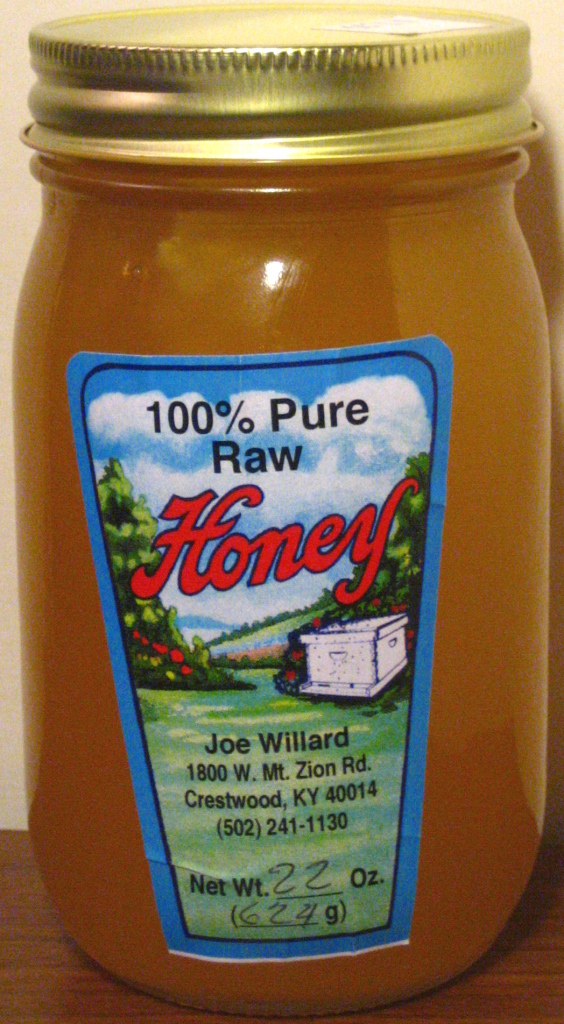
I fed them this honey which miraculously got them through the winter. This is usually a no-no, as feeding the bees honey from another hive has the risk of introducing diseases or bacterias. At that point though, I felt that I had to do something, and the hive had nothing to lose.
By April/May, I was in the hive doing the post-winter inspection - and they looked great!
The queen looked wonderful and healthy...
 |
| find the queen.... |
The hive continued to grow in population during the spring and early summer - and made a good amount of honey.

The hives grows with lots of frames of honey!
The bottom two boxes are where the queen, brood (larvae), and lots of workers reside. They also had some frames of honey and pollen in this section. I pulled some of the honey out of this area to help ensure they didn't become 'honey bound'. If they have too much honey in the brood areas, they feel cramped and run out of room for more brood. This brings on plans to split the hive population by swarming. Giving them plenty of space for brood helps prevent them from swarming, if that's what you're after.
You can also see in the pic above the lovely thyme that I've planted around the hive. It's too close to the hive for them to really forage in the thyme blossoms, but I like to think that it makes them happy anyway. I've also got some great lemon balm in this part of the 'bee yard' - which is another healthy plant that honey bees love. Thanks to my friend Heather and her mom for the lemon balm.
Another thing to notice in the above pic - you might remember me writing about the hive in summer - they like to hang out on the 'front porch' of the hive on the hot days/evenings of summer.
With such a healthy hive and so much honey, I knew it would soon be time for my first honey harvest....
A hidden KY gem: the annual Bluegrass Beekeeping School
As promised, I'll share with the the top 6 honey bee highlights of 2010. Here's the first....
As of a few years ago, one of the annual highlights in my life is most definitely attending the day long Bluegrass Beekeeping School. Click on the link to find out about 6 KY beekeeping schools in 2011.
It's one of those amazing events that many people don't realize we have in Kentucky.
While they have the schools across the state, from Hazard to Henderson, my 'home' school is the main event in Frankfort on the Kentucky State University Campus. Always held on a full Saturday in March, this is a gathering of over 300 honey bee fans. This isn't your grandfather's beekeeping gathering. This is an amazing place where kids, parents, old-timers, new-schoolers, women and men, country farmers, urban gardeners, and suburban dwellers come together to learn from and inspire each other.
There's a beginner's beekeeping tract of classes - perfect for the first and second year beekeepers. There are also plenty of really interesting advanced classes. The workshops I attended in 2010 included a presentation on the nine species of honey bees around the world. Did you know about the stingless Mayan honey bees? Or the giant honey bees of southern Asia? What about the different species that our local beekeepers choose? Carnolian (from Slovenia), the Italian (the most popular here), and the Russian. Each is known for certain traits and each beekeeper has her/his own preference.
My favorite workshop was given by Tiffany Gillespie who lives with her husband and son near Mammoth Cave. She talked about the special type of hives they are using - called a top bar hive (tbh). Having the opportunity to see the hives that they built and hearing about their experience was inspiring. It planted the seed that has since then been nurtured into an exciting venture for 2011. More on this in upcoming posts.
The school provides a place for vendors who sell beekeeping supplies, bee products (like Toni Downs' famous lip balm), and other fun and important beekeeping items.
If you're interested in becoming a beekeeper or just want to learn more about honey bees - plan to attend one of the KY beekeeping schools.
The 2011 Bluegrass Beekeeping School will be on March 12th. I'll even be presenting this year!
I'll be providing the first "urban beekeeping" workshop at the BBS. I expect there will be other experienced urban beekeepers there - so there will be a good space to share and discuss our sometimes unique needs and experiences. Thanks to Phil Craft, the Kentucky State Apiarist, for getting me on the agenda.
Rich, my husband, has even said he wants to join me at the school this year! Should be fun....
As of a few years ago, one of the annual highlights in my life is most definitely attending the day long Bluegrass Beekeeping School. Click on the link to find out about 6 KY beekeeping schools in 2011.
It's one of those amazing events that many people don't realize we have in Kentucky.
While they have the schools across the state, from Hazard to Henderson, my 'home' school is the main event in Frankfort on the Kentucky State University Campus. Always held on a full Saturday in March, this is a gathering of over 300 honey bee fans. This isn't your grandfather's beekeeping gathering. This is an amazing place where kids, parents, old-timers, new-schoolers, women and men, country farmers, urban gardeners, and suburban dwellers come together to learn from and inspire each other.
There's a beginner's beekeeping tract of classes - perfect for the first and second year beekeepers. There are also plenty of really interesting advanced classes. The workshops I attended in 2010 included a presentation on the nine species of honey bees around the world. Did you know about the stingless Mayan honey bees? Or the giant honey bees of southern Asia? What about the different species that our local beekeepers choose? Carnolian (from Slovenia), the Italian (the most popular here), and the Russian. Each is known for certain traits and each beekeeper has her/his own preference.
My favorite workshop was given by Tiffany Gillespie who lives with her husband and son near Mammoth Cave. She talked about the special type of hives they are using - called a top bar hive (tbh). Having the opportunity to see the hives that they built and hearing about their experience was inspiring. It planted the seed that has since then been nurtured into an exciting venture for 2011. More on this in upcoming posts.
The school provides a place for vendors who sell beekeeping supplies, bee products (like Toni Downs' famous lip balm), and other fun and important beekeeping items.
If you're interested in becoming a beekeeper or just want to learn more about honey bees - plan to attend one of the KY beekeeping schools.
The 2011 Bluegrass Beekeeping School will be on March 12th. I'll even be presenting this year!
I'll be providing the first "urban beekeeping" workshop at the BBS. I expect there will be other experienced urban beekeepers there - so there will be a good space to share and discuss our sometimes unique needs and experiences. Thanks to Phil Craft, the Kentucky State Apiarist, for getting me on the agenda.
Rich, my husband, has even said he wants to join me at the school this year! Should be fun....
Tuesday, November 16, 2010
My 2010 Honeybee Adventures
A wonderful thing about it being November...
 |
| Beehives in hillside olive groves near Assisi, Italy |
A wonderful thing about it being November...
Getting closer to the end of the year has meant that I've started to look back onto my life in 2010. It's exciting to have experienced some big moments in beekeeping this year. While I haven't posted this year yet - forgive me! - there is lots to tell. In the coming month, I'll be posting the stories and pics from my honeybee adventures this year (so far!).
Above is a photo that I took in September to pique your interest!
Sunday, July 26, 2009
How are the bees doing? - Part II


Here are more pics - mostly from today. I pulled out 3 frames to inspect.
The top photo is of frame #8. They are starting to fill this frame with honey, esp. on the right side of the frame. Good - but hoping they are able to really get some honey saved before winter (thought they would've had much more made by now).
The 2nd frame pic on the is frame #4. The queen was on the left side of this frame - which is a great sign. She has expanded her egg laying further out on the right side of the box.
They haven't moved into the upper box yet, but hopefully will do this sometime in August.
The last photo that I posted in this entry - on the bottom, right - darker photo - is one that makes me smile every time I see it. The story: Each night when I come home from work, I stop at the hive and take a peek. I came home one night in June and the bees were outside the hive entrance like in the photo. I worried a bit - wondering what might be going on inside. Plus, the way they gathered, many of them were walking on top of each other, which seemed odd at the entrance. They were moving around slowly - an unusual sight for the busy worker bees. I did a little research on the Internet, and discovered that they were simply 'hanging out on the front porch on a warm summer's evening.' Now when I see them doing this, I picture a porch swing, glasses of lemonade, and perhaps a few of the most hardworking bees have a nice refreshing margarita as their relaxing sugar source for the evening!
So how are the bees doing?


This is the fun question that is posed to me often...by friends, family, neighbors, and others who know I've got a wonderful beehive in my backyard.
I try to gauge this question...just as you might when someone asks "how are you doing?" I try to answer the question, connecting to what they seem interested in...and not overdo it with my geeky love of all things bees. Luckily, it seems that many people have their own fascination or interest in honey bees (even if a little fear is involved).
So I'll include some photos for those who just want a highlight - and warning - I am going to document some of the details - as this is the closest thing I have to a bee journal.
The bees overall seem to be doing well. I have seen the queen several times (sometime she 'hides' and it's tough to find her). She always looks good, and the cells with eggs and larvae are expanding.
I haven't seen many drone cells yet. The hive needs some drones, but the preference of a typical beekeeper is that you don't want to see too many. I just saw a few today, but not many at all.
I remind myself of what I imagine a new parent is like with their first child. Attention to details that if I had more hives, I might not worry as much about. One example: I decided today to number the frames in the hive body (bottom 'box' and the super (top box). This will help me monitor the growth of the hive a little better.
Look at the middle picture (taken by my official photographer, Rich, during an early June inspection). You can see only a small amount of bees on top of the frames. The hive is expanding out from these center frames as more eggs are laid, larvae are cared for, and little bees (yes, they do seem a bit smaller!) emerge from their cells.
The top photo I took today. You can see many more bees and they have expanded out a bit more. Many more bees on top, mean many more bees down in the hive body (and then all of the bees that are out and about who should return this evening).
They look really good overall. I'm a bit concerned because all of the rain this summer has slowed them down. Just like us, they mostly have to stay in when it's raining - which has meant this summer significantly less time for foraging.
Their mission is twofold: to support new bees so the hive can grow - and to build up honey and pollen for the winter. With less time for foraging, they have not made much honey. I just hope that with mother nature's and my support, and their industriousness, they will still have plenty of time to make the honey they need to get the hive through the winter.
Subscribe to:
Posts (Atom)
